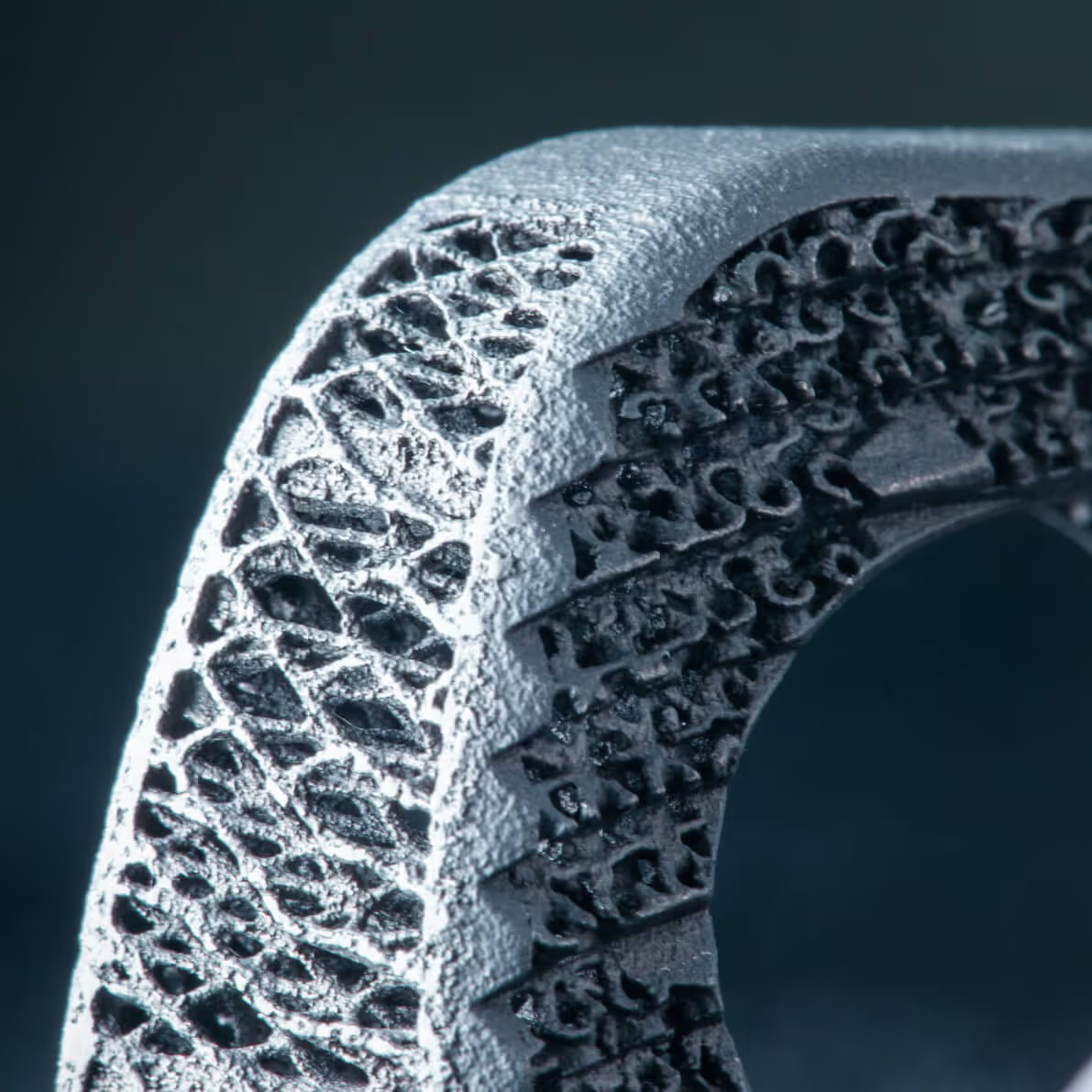
Designed for Fusion. Engineered from Bone.
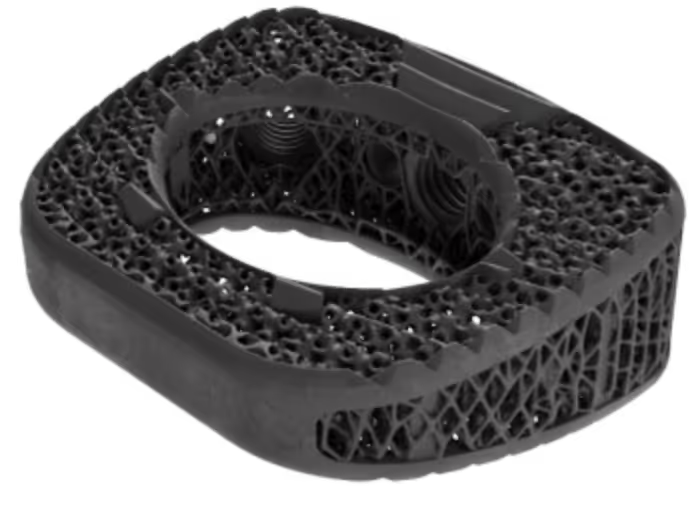
Dual lattice 3D printed titanium implants with continuous porosity, combining biomimetic architecture and engineered pore structures to optimise fixation, fusion, and long term outcomes.
Spinal Fusion Demands More

Mechanical Compromise
Traditional implants force a trade-off between stiffness and porosity, leading to stress shielding or instability.

Interrupted Biology
Many implants do not support continuous bone formation through the implant due to disconnected or blocked pore structures.

Simplified Architectures
Repeating lattice structures are designed for manufacturability, not biological performance.
Two Lattices. One Continuous Fusion Pathway.
Perforated TPMS (Endplates)
Controlled pore range (~100–400 μm)
Optimised for surface adhesion and early fixation
Mechanically aligned to cortical bone
Orthofoam Biomimetic Lattice (Body)
Non-repeating, biomimetic architecture
Larger pore range (~400–1000 μm+)
Designed to replicate trabecular bone structure
100 – 400 μm
pore range (adhesion zone)
400 – 1000 μm
pore range (fusion zone)
Full pore interconnectivity


Improved initial
stability”
Confidence in
endplate fixation”
Better radiographic
visibility of fusion”
St Andrews Hospital, Adelaide South Australia
Bring Next-Generation Spine Technology to Your OR